
Throughout my degree, I’ve always tailored the focus of my personal projects towards tackling sustainable and ethical issues within fashion, due to learning early on about the industry’s large carbon footprint as well as oftenpoor social responsibility standards. After completing a placement at a sustainable luxury retailer that was just beginning to implement a rental scheme, I realised the importance of the circular economy concept in addressing the wastefulnature of the apparel industry. Before beginning final year, I knew that I wanted to incorporate this concept into my major projects.
My final project business plan is an omnichannel clothes exchange company called _WoreItFirst. The name was created with the idea that the gap is designed to be filled with the name of a garment’s previous owner. The business would operate via a C2C application, allowing consumers to trade garments digitally, or in person, by connecting them with physical London-based ‘Swap Up’ events. The company mission to eliminate the need for constant consumption whilst providing access to new pieces is summed up in its slogan ‘Still Fast, Still Fashion, Just Not Fast Fashion.’ The following images present _WoreItFirst’s identity, target demographic, and user journeys.


_WoreItFirst has 2 key consumer groups. These are ‘The Mindful Minimalist’ and ‘The Cultured Socialite.’ Both groups are affluent, London based and forward thinking with their purchase decisions, yet their motives for using the _WoreItFirst service differ slightly as demonstrated.
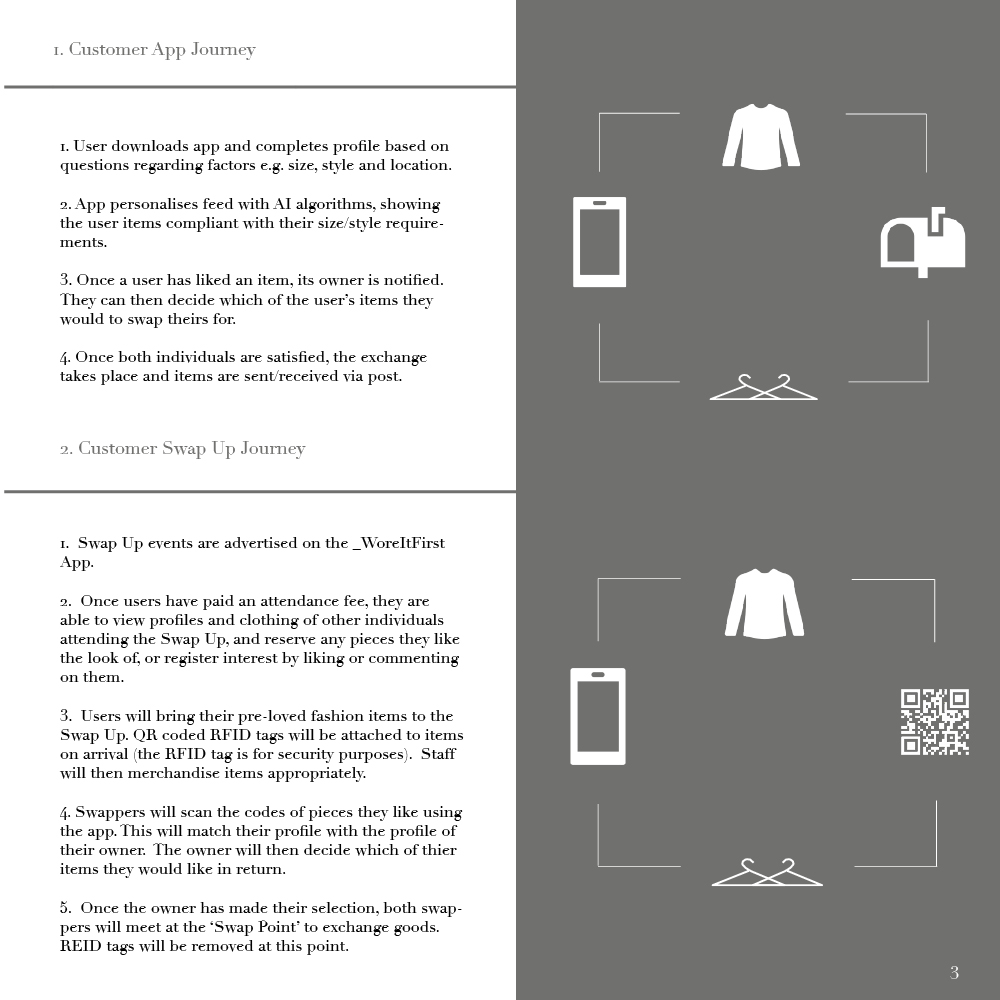
This page outlines both physical and digital consumer experiences of _WoreItFirst.

This page outlines the apps UX design and includes key User Interfaces, from the ‘explore’ page, to ‘user profiles’, to ‘event pages.’